
Understanding Security Guard Liability: How Manitoba Guards Can Avoid Costly Mistakes
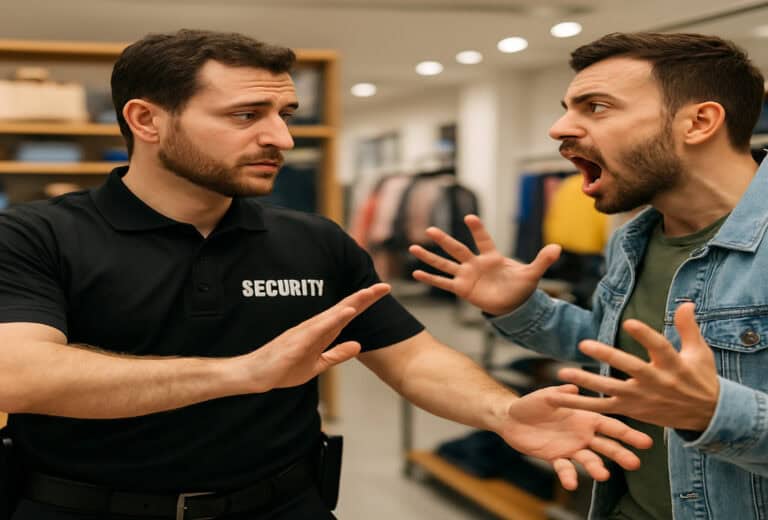
A security guard asks someone to leave a Winnipeg shopping centre. A customer questions why their bag is being searched. An individual becomes confrontational at the entrance to a commercial building.
These situations may seem routine, but the decisions made during them can have serious consequences.
Security guards are responsible for protecting people and property while respecting the legal rights of the individuals they encounter. When a guard acts outside their authority, uses unnecessary force, or treats someone unfairly, an ordinary interaction can turn into a lawsuit or human rights complaint.
For security professionals working in Manitoba, understanding these risks is an essential part of the job.
Two recent legal developments in British Columbia demonstrate how security decisions can lead to significant financial, professional and reputational consequences.
Although the incidents occurred outside Manitoba, they offer important lessons for guards working in retail stores, residential buildings, commercial properties, healthcare facilities and public events throughout the province.
When Security Decisions Have Serious Consequences
Security guards are often expected to make decisions quickly, sometimes in stressful or unpredictable circumstances.
However, the responsibility to protect a property or enforce rules does not give guards unlimited authority.
Two Canadian cases demonstrate what can happen when security interactions are handled improperly.
Metrotown Mall: An Unlawful Arrest Leads to $1.8 Million in Damages
In 2019, security guards at Metropolis at Metrotown in Burnaby, British Columbia, confronted a young person they believed had previously been banned from the shopping centre.
The encounter escalated into an unlawful arrest, physical assault and detention.
According to the court proceedings, the guards pushed the individual down a set of stairs, detained them in a locked room and denied access to a telephone.
The defendants admitted liability for assault, false arrest and false imprisonment.
The individual suffered physical injuries and psychological harm.
In April 2026, a British Columbia court awarded approximately $1.8 million in damages, including $1 million in punitive damages against Paladin Security.
The court also criticized the security company’s handling of the incident, including failures to properly investigate and respond to the misconduct.
For Manitoba security guards, the case highlights the importance of understanding when an arrest or physical intervention may be legally justified.
It also demonstrates why security companies must take complaints and employee conduct seriously.
Canadian Tire: Discriminatory Treatment Results in a Human Rights Settlement
A separate incident at a Canadian Tire store in Coquitlam, British Columbia, involved Richard and Dawn Wilson, a father and daughter from the Heiltsuk Nation.
In January 2020, the pair were shopping while waiting for vehicle service.
During checkout, a security guard employed by Blackbird Security singled out Richard Wilson for a backpack search.
When Dawn Wilson questioned the treatment, a store employee responded with racist remarks.
The Wilsons subsequently pursued a human rights complaint.
In May 2026, the matter was resolved through a settlement.
As part of the agreement, Blackbird Security acknowledged that its former employee had violated British Columbia’s Human Rights Code through racial profiling and discrimination.
The store acknowledged derogatory remarks made by a former employee, while Canadian Tire Corporation acknowledged shortcomings in how the complaint was forwarded.
The settlement included confidential financial compensation, additional training, improved complaint-handling procedures, and commitments to objective, race-neutral loss-prevention practices.
Although the settlement was not a tribunal ruling following a full hearing, it demonstrated the serious consequences that can arise from discriminatory security practices.
For Manitoba security professionals, the lesson is clear: security decisions must be based on lawful, objective grounds and applied fairly to everyone.
Understanding Security Guard Responsibilities in Manitoba
Security guards in Manitoba work within a legal framework that includes both federal and provincial legislation.
Understanding these laws is essential for making appropriate decisions on the job.
Manitoba’s Private Investigators and Security Guards Act
The Private Investigators and Security Guards Act establishes the provincial framework for regulating security guards and private investigators in Manitoba.
Individuals performing regulated security work must meet applicable licensing requirements.
The legislation also addresses matters relating to licensing, conduct, and oversight.
However, holding a Manitoba security guard licence does not provide the same authority as a police officer.
Security guards must understand the limitations of their role and operate within the law.
The Criminal Code of Canada
The Criminal Code includes provisions relating to arrests by persons other than peace officers, self-defence, defence of property and circumstances in which force may be legally justified.
These provisions apply throughout Canada, including Manitoba.
However, they do not give security guards unlimited powers to arrest, detain or use force.
The legality of an intervention depends on the circumstances and the specific legal requirements involved.
Manitoba’s Petty Trespasses Act
Security guards working at commercial, residential, and other properties may encounter situations involving unauthorized entry or individuals refusing to leave.
Manitoba’s Petty Trespasses Act addresses certain forms of trespassing and provides a legal framework relevant to these situations.
However, guards must understand the requirements and limitations of any action they take.
Asking someone to leave a property is not the same as having unrestricted authority to physically remove or detain them.
Manitoba’s Human Rights Code
The Manitoba Human Rights Code protects people from discrimination in specified areas, including services available to the public.
Security guards must apply policies fairly and avoid making decisions based on stereotypes or protected personal characteristics.
This is particularly important in assignments involving public access, customer screening, and interactions with vulnerable individuals.
How Everyday Security Situations Can Create Legal Risks
The legal risks associated with security work are not limited to major incidents.
Sometimes, the greatest problems begin with ordinary interactions that are handled poorly.
Situation 1: Someone Refuses to Leave a Winnipeg Business
Imagine you’re working security at a commercial property in Winnipeg.
An individual has been asked to leave after a disagreement with staff.
The person refuses, raises their voice, and demands an explanation.
Your responsibility is to address the situation professionally while remaining within your legal authority.
An aggressive response could make the situation worse.
Instead, consider:
- Clearly explaining the request.
- Remaining calm and respectful.
- Understanding the applicable trespass rules.
- Maintaining a safe distance.
- Requesting assistance when appropriate.
- Avoiding physical intervention without lawful justification.
A person refusing to cooperate does not automatically justify using force.
The goal should be to resolve the situation safely and lawfully.
Situation 2: A Customer Is Suspected of Shoplifting
You’re assigned to loss prevention at a Manitoba retail store.
You notice someone acting suspiciously near a merchandise display.
You believe they may be stealing, but you haven’t clearly observed an offence.
Can you detain them?
Suspicion alone does not automatically provide lawful grounds for an arrest.
Security guards must understand the applicable Criminal Code provisions and follow appropriate procedures.
Common loss-prevention practices may involve observing merchandise selection, maintaining continuity of observation, and establishing evidence that an offence has occurred.
However, these practices are not a universal legal checklist.
The legal authority to arrest depends on the specific circumstances.
An unlawful detention can expose a guard and their employer to serious consequences.
Situation 3: A Visitor Questions a Security Screening Procedure
Imagine you’re working at an event venue where bag inspections are part of the entry process.
A visitor asks why their bag has been selected for inspection when others have not.
This is an opportunity to communicate professionally and explain the applicable screening procedures.
Security guards should understand that they do not have general police search powers.
Where inspections rely on consent, that consent must be meaningful, and refusal does not automatically justify a forced search.
Depending on the circumstances and lawful venue policies, the appropriate response may be to decline entry rather than attempt to compel compliance.
Screening procedures must also be applied fairly and without discrimination.
The Canadian Tire settlement demonstrates how inconsistent or discriminatory treatment can lead to serious complaints and organizational consequences.
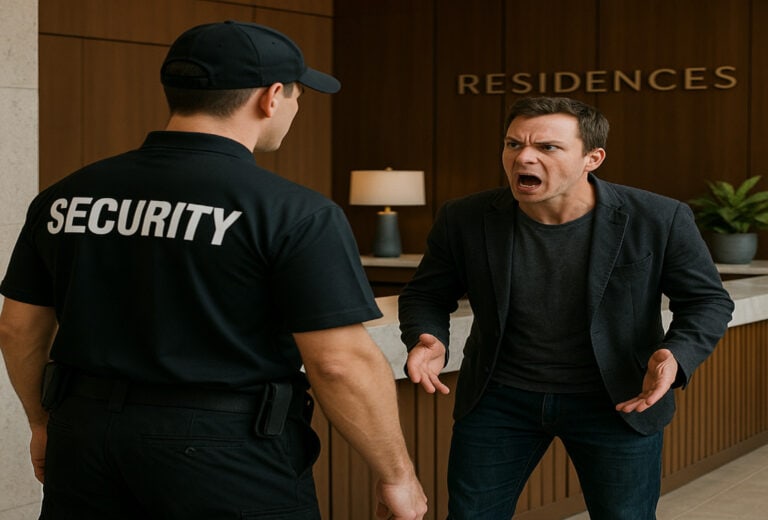
Situation 4: An Individual Becomes Aggressive During an Interaction
You’re working security at a residential building.
An individual becomes upset after being denied access and begins shouting.
The situation is uncomfortable, but verbal aggression alone does not automatically justify physical force.
A professional response may include:
- Maintaining a calm tone.
- Avoiding personal arguments.
- Explaining the reason for the access restriction.
- Keeping an appropriate distance.
- Calling for assistance if the situation escalates.
- Following established emergency procedures.
Recognizing when to disengage can be just as important as knowing when intervention may be necessary.
Why De-escalation Is an Important Legal Risk Management Skill
Security guards often encounter people who are frustrated, distressed, angry, or unwilling to cooperate.
How a guard responds can influence whether the interaction remains manageable or becomes more confrontational.
Consider two approaches to someone refusing to leave a property.
Confrontational approach:
“You need to leave right now. I’m not asking again.”
Professional approach:
“I understand you’re upset, but you’re not permitted to remain on the property. I’d like to resolve this safely. Can we move toward the exit?”
Both communicate a boundary.
However, the second approach is more likely to support cooperation without unnecessary hostility.
Effective de-escalation involves:
- Speaking calmly and clearly.
- Listening to concerns.
- Avoiding insults or threats.
- Providing simple explanations.
- Recognizing signs of escalating behaviour.
- Maintaining appropriate personal space.
- Seeking assistance when necessary.
De-escalation does not guarantee that every encounter will end peacefully.
However, it can help guards avoid unnecessary confrontations and support safer, more defensible decisions.
The Legal Risks of Unnecessary Force
Physical intervention is one of the most serious decisions a security guard may face.
Canadian law recognizes limited circumstances in which force may be legally justified, including certain situations involving self-defence, defence of property and lawful arrests.
However, those circumstances are subject to specific legal requirements.
Security guards do not have unrestricted authority to use force simply because someone is uncooperative, verbally aggressive or violating a property rule.
Any use of force must be assessed against the applicable legal standards and the circumstances involved.
Guards should understand:
- When force may be legally justified.
- The limitations of their authority.
- The importance of necessity and proportionality.
- When de-escalation or disengagement may be safer.
- Their responsibilities for reporting and documenting incidents.
The Metrotown case demonstrates how unlawful arrest and excessive force can cause serious harm and result in significant legal consequences.
The Importance of Fair and Consistent Treatment
Professional security work requires treating people respectfully and without discrimination.
Security guards must make decisions based on observable behaviour and legitimate security concerns rather than assumptions about a person’s background or identity.
This is particularly important when working in public-facing environments.
For example, a person carrying a backpack or wearing particular clothing is not, by itself, evidence of wrongdoing.
Security personnel should apply established screening and access-control procedures consistently.
They must also understand their responsibilities under Manitoba’s Human Rights Code.
When someone raises a concern about unfair treatment, guards should take the complaint seriously and follow appropriate reporting procedures.
The Canadian Tire settlement reinforces why fair treatment, cultural awareness, and meaningful complaint handling are essential parts of professional security work.
Accurate Incident Reporting Protects Everyone
Security guards are often responsible for preparing written reports following incidents.
These reports may later be reviewed by supervisors, employers, investigators, or legal professionals.
Accurate documentation is therefore an important part of professional accountability.
A good incident report should focus on facts rather than assumptions.
For example, instead of writing:
“The individual was trying to cause trouble.”
A more objective description might be:
“The individual raised their voice, refused two requests to leave, and struck the reception counter with an open hand.”
The second statement describes observable behaviour rather than assigning a motive.
Incident reports should include relevant details such as:
- Date, time and location.
- Individuals involved.
- Behaviour observed.
- Statements made.
- Actions taken by security personnel.
- Assistance requested.
- Injuries or property damage.
- Witnesses and available evidence.
Guards should follow their employer’s reporting procedures and applicable privacy requirements.
Clear documentation can help explain the decisions made during an incident and support appropriate follow-up.
Security Companies and Clients Share Important Responsibilities
When security incidents result in legal proceedings, responsibility may extend beyond the individual guard.
Security Companies
Security employers should provide appropriate training, supervision and clear operational procedures.
They must also respond seriously to complaints and allegations of misconduct.
Potential sources of liability may include inadequate training, poor supervision, deficient policies or failures to investigate incidents appropriately.
The Metrotown decision demonstrates how organizational failures can contribute to substantial legal consequences.
Client Organizations
Businesses that hire contract security services also have responsibilities.
Although outsourcing security can provide professional expertise, it does not automatically eliminate every potential source of legal liability.
Clients should support lawful security practices, fair treatment, and effective complaint-handling procedures.
The Canadian Tire settlement demonstrates how several organizations may become involved when security practices result in discriminatory treatment, and complaints are not adequately addressed.
How Proper Training Helps Manitoba Security Guards Avoid Costly Mistakes
Security guard training is about more than learning how to patrol a property or monitor access points.
It provides foundational knowledge for making professional decisions in challenging situations.
In Manitoba, individuals seeking to work as security guards must meet applicable provincial licensing and training requirements.
Training helps aspiring security professionals understand important topics such as:
- Legal authority and responsibilities.
- Professional conduct.
- Communication and conflict management.
- Observation and incident reporting.
- Emergency response.
- Personal safety.
- Ethical decision-making.
These skills are relevant across a wide range of security assignments.
A guard working in a Winnipeg shopping centre may need to respond to suspected theft.
A guard at a residential property may encounter a trespassing concern.
An event security guard may need to manage an aggressive attendee.
A healthcare security guard may interact with someone experiencing distress.
The circumstances may differ, but the need for lawful, respectful, and professional decision-making remains consistent.
Training cannot prevent every incident, but it helps guards understand their responsibilities and recognize the risks associated with poor decisions.
Professional Judgement Can Make All the Difference
The Metrotown Mall and Canadian Tire incidents demonstrate that security decisions can have consequences extending far beyond the original interaction.
An unlawful arrest can lead to substantial financial damages.
Discriminatory treatment can result in human rights complaints and organizational changes.
Poor communication, inadequate supervision, and failures in accountability can make difficult situations even worse.
For Manitoba security guards, the most important lessons are straightforward:
- Understand the limits of your legal authority.
- Make decisions based on objective facts.
- Treat people fairly and respectfully.
- Use de-escalation whenever appropriate.
- Avoid unnecessary physical intervention.
- Document incidents accurately.
- Follow established policies and reporting procedures.
Security work requires confidence, but that confidence must be supported by knowledge, sound judgement and respect for the law.
At Manitoba Guard Training, we help aspiring security professionals prepare for careers in Manitoba’s security industry through accessible online training.
Whether you’re entering the field for the first time or looking to strengthen your understanding of professional responsibilities, proper training provides an important foundation.
Because the best security decisions don’t just protect property. They protect people, respect their rights, and help prevent unnecessary harm.
Explore your security guard training options at ManitobaGuardTraining.ca.
References
- The Canadian Press. (2026, April 23). B.C. court awards $1.8M in damages for assault, wrongful arrest by Metrotown guards. Global News. https://globalnews.ca/news/11813664/metrotown-guards-arrests-damages/
- Joannou, A., & Greer, D. (2026, May 19). Washing ceremony marks settlement of Canadian Tire racial profiling complaint. The Canadian Press, via CityNews. https://vancouver.citynews.ca/2026/05/19/washing-ceremony-marks-settlement-of-canadian-tire-racial-profiling-complaint/
- Government of Manitoba. The Private Investigators and Security Guards Act. https://web2.gov.mb.ca/laws/statutes/ccsm/p132.php
- Government of Manitoba. The Petty Trespasses Act. https://web2.gov.mb.ca/laws/statutes/ccsm/p050.php
- Manitoba Human Rights Commission. The Human Rights Code. https://www.manitobahumanrights.ca/
- Government of Canada. Criminal Code. https://laws-lois.justice.gc.ca/eng/acts/C-46/